
Table of contents
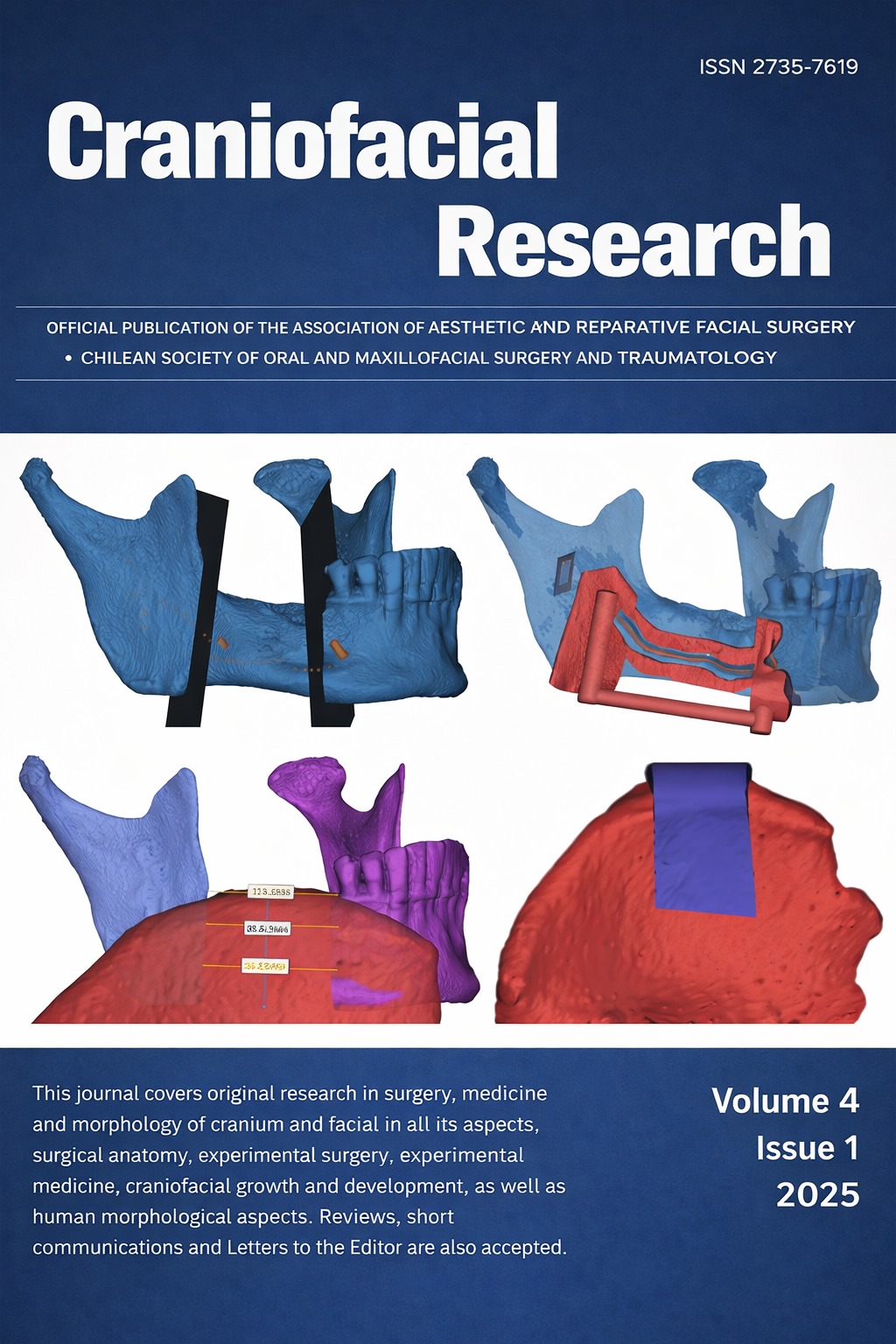
Volume: 4
Issue: 1
1. Teratoid cyst of the lower lip in an adult patient: case report
Teratoid cysts are rare occurrences in the oral cavity, particularly in adults, and are more commonly found in infants. Histologically, these cysts are characterized by the presence of respiratory epithelium, smooth muscle cells, and sebaceous glands. This report aims to describe a case of a teratoid cyst located in the lower lip of an adult patient. A 57-year-old male presented with a slow-growing lesion on the right side of the lower lip, first noticed four years prior. An excisional biopsy was performed, revealing a well-defined cystic lesion with thick, whitish content within its lumen. Histopathological examination showed an orthokeratinized stratified squamous epithelial lining with abundant keratin, dense connective tissue, multinucleated giant cells, and mucosecretory cells. Additionally, cutaneous adnexal structures such as sebaceous glands and hair follicles were identified. Follow-up at one month revealed no cutaneous sequelae. Teratoid cysts in the oral region are rare in adults, and definitive diagnosis relies on histopathological evaluation.
2. Aggressivecentralgiantcellgranuloma:three-dimensional reconstructionandplanning with autogenous graft. Case report and literature review
Giant Cell Lesions are a group of benign, non-odontogenic intraosseous lesions characterized by the presence of multinucleated giant cells. These lesions can be classified as either aggressive or non- aggressive based on their clinical and radiographic features. The aggressive variant is a rapidly growing lesion that may lead to root resorption, tooth displacement, thinning or perforation of the cortical bone, and is associated with a high recurrence rate. In contrast, the non-aggressive variant is typically asymptomatic, grows slowly, and has a low rate of recurrence. This case describes a 43-year-old male patient diagnosed with an aggressive variant of a mandibular Giant Cell Lesion. The patient was successfully treated with block resection and reconstruction using an iliac crest graft at the Military Hospital of Santiago. For this procedure, virtual planning software and 3D printing technology were employed to design and accurately position a cutting guide and tu- mor resection template, enabling complete preservation of the Inferior Alveolar Nerve (IAN) during surgery. After a one year follow-up, the patient showed favorable progress with no signs of recurrence, and osseointegrated implants were successfully placed. This case underscores the significance and potential of 3D virtual planning in mandibular resection, as it facilitates the preservation of critical anatomical structures that were previously difficult to protect. The integration of advanced technologies such as 3D printing and virtual planning not only enhances surgical precision but also improves clinical outcomes, reduces complications, and elevates the patient's quality of life.
3. Evaluation of implant survival in atrophic jaws reconstructed with calvarial bone graft
The aim of this study was to analyze the survival rates of installed implants in atrophic maxillae reconstructed with calvarial bone graft. Was realized a retrospective study that evaluated the survival rate of implants, through the collection of data from medical records, including variables such as age and sex, type of reconstruction performed, number and platform of the installed implants, type of implant loss, the region of loss, as well as the time of clinical follow-up, through descriptive and exploratory data analysis. The sequence of removal, han- dling and stabilization of the calvarial bone graft, in addition to the installation of implants and prosthetic preparation followed routine standards and parameters established in the literature. The reconstruction of atrophic maxillae with autogenous calvarial bone graft provided high survival rates for dental implants, proving to be predictable. Of the 15 patients analyzed, 13 (86.7%) had survival of all implants, with only two cases of early loss of dental implants, showing that for a total of 95 dental implants installed in the reconstructed jaws, the survival rate was 97.9%. The calvarial bone as a donor area for reconstructions, prior to the installation of implants, therefore, represents a great alternative, allowing the correction of bone deficiencies and providing stability and maintenance of bone volume, with satisfactory results regarding implant survival and low failure rates.
4. Management algorithm for orthognathic surgery with and without simultaneously rhinoplasty
Orthognathic surgery is one of the procedures with the greatest impact on facial aesthetic changes. However, its results can be further enhanced when combined with rhinoplasty, highlighting the importance of evaluating and considering the integration of these procedures. To propose a management algorithm for assessing nasal morphology in patients with facial skeletal deformities and to determine possible surgical alternatives. A retrospective study was conducted, evaluating photographic records of patients who underwent combined orthognathic surgery and rhinoplasty, as well as isolated orthognathic surgery, at a private institution (CIMAX, Lechería, Venezuela) between July 2016 and October 2023, with a minimum follow-up of 12 months. A common pattern of nasal characteristics in Class II and Class III patients related to maxillary morphology was identified and established as a nasal deformity associated with skeletal deformity. Conversely, patients presenting nasal characteristics that did not follow the associated pattern were classified as having intrinsic nasal deformities. A classification system comprising seven patient types was developed, based on the relationship between skeletal and nasal deformities and their corresponding management approaches. The proposed classification serves as a practical guide for diagnosis and clinical decision-making in the correction of nasal components in conjunction with orthognathic surgery.
5. Dystrophic calcifications in the masseter muscle: Case report and literature review
Dystrophic calcifications are ectopic calcium deposits that occur in the absence of metabolic abnormalities, typically as a reaction to nonspecific tissue injury following an inflammatory response, leading to calcification of the damaged tissue. They may appear as incidental findings on routine radiographs. Reports involving the head and neck region are rare, and all previously documented cases have been located within or adjacent to the masseter muscle. This article presents a literature review and a case report of a patient with dystrophic calcifications in the masseter muscle identified as an imaging finding, without any history of trauma or infection, and managed conservatively.
6. Tetracycline fluorescence as a surgical guide for medication-related osteonecrosis of the jaws. Scoping review
Medication-related osteonecrosis of the jaws (MRONJ) is a severe adverse reaction affecting patients treated with antiresorptive and/or antiangiogenic drugs, particularly at high doses and short intervals, as is commonly prescribed in oncologic therapy, rather than at lower doses and less frequent administration associated with osteoporosis. The American Association of Oral and Maxillofacial Surgery has classified MRONJ into four diagnostic stages, which determine treatment strategies ranging from conservative to surgical. Because the removal of necrotic bone is a critical step in management, tetracycline-guided fluorescence has been proposed to reduce recurrence resulting from insufficient or excessive surgical margins, both of which may compromise maxillary bone integrity. A systematic search was conducted using the following terms in different combinations: osteonecrosis, fluorescence, tetracycline, mandible, and surgery, across the PubMed, Scopus, and Web of Science databases. According to the inclusion and exclusion criteria, 4 articles were selected, comprising a sample of 51 patients diagnosed with 57 lesions, all treated with tetracycline-guided fluorescence. Treatment success ranged from 89 % to 100 %, with mucosal integrity as the primary outcome measure. Tetracycline-guided fluorescence shows promising potential as a valuable tool for distinguishing necrotic from vital tissue. However, further prospective clinical studies are needed to validate its potential usefulness as a surgical guide.
7. 5-Fluorouracil as an adjuvant treatment for odontogenic keratocysts: Literature review
The Odontogenic Keratocyst (OKC) is a maxillary cyst characterized as a benign entity with aggressive behavior and a high recurrence rate following surgical management. The use of Carnoy’s solution (CS) as a chemical adjuvant treatment in surgery has been employed to reduce the recurrence rate of this lesion. Currently, 5-fluorouracil (5-FU) has been described as an alternative method that may be safer while yielding similar outcomes based on patient follow-up. The aim of this study was to compare, through the collected scientific evidence, the effectiveness of the topical application of 5-FU in the surgical treatment of OKC relative to conventional and modified CS. A literature review was conducted in the PubMed, Epistemonikos, and SCOPUS databases using the search terms: “((fluorouracil) AND ((keratocyst))”. A total of 16 articles were identified, of which 5 were excluded after applying the inclusion criteria, resulting in 10 articles for review. 5-FU represents a valid alternative for the treatment of OKC, showing apparent significant differences in terms of safety and adverse effect rates compared to modified and conventional CS. However, further studies are recommended, as the evidence found is of low quality, limiting proper comparison between the two therapies.
8. Treatment of mandibular condyle impactation/dislocation into middle cranio fossa: a systematic review
Penetration of the mandibular condylar head into the middle cranial fossa is a rare event but can lead to serious complications, primarily due to the creation of a defect in the cranial base that poses a significant risk of hemorrhage from the middle meningeal artery. This systematic review aimed to identify the optimal treatment approach for mandibular condyle impaction or dislocation into the middle cranial fossa. We conducted a systematic review of the literature following the PRISMA (Preferred Reporting Items for Systematic Reviews and Meta-Analyses) guidelines. A comprehensive search was performed across PubMed, Embase, ScienceDirect, Cochrane Library, and Google Scholar for relevant articles published between 1960 and 2023. Descriptive statistics were used to analyze the data. A total of 43 studies were included, encompassing 48 reported cases. The findings revealed a notable predominance of female patients and the following outcomes.
9. Treatment of choice in patients with facial asymmetry associated with unilateral condylar growth
Condylar hyperplasia (CH) is defined as a non-neoplastic excessive growth of the mandibular condyle, most frequently observed between 11 and 30 years of age. Mandibular osteochondroma (OC), on the other hand, is a benign neoplasm described as an osteocartilaginous exostosis, commonly reported in patients between 20 and 40 years, although it may occur at any age. The clinical features and patient motivations in both conditions are similar; therefore, the aim of this review was to evaluate, in the literature from the past 10 years, the treatment of choice in patients with facial asymmetry associated with condylar hyperplasia and mandibular osteochondroma. A literature review was performed, yielding a total of 32 articles after applying inclusion and exclusion criteria. Collectively, these studies reported 1,388 patients, including 859 women (61.9 %) and 529 men (38.1 %), with ages ranging from 7 to 83 years. The treatments performed included partial or total condylectomies, either conventional or endoscopically assisted, in addition to orthognathic surgery, which comprised the majority of management strategies. The longest follow-up period reported was 20 years, and only 5 authors documented recurrences, demonstrating long-term stability. We conclude that condylectomy, in its different variations with or without orthognathic surgery as indicated, represents a safe alternative for the treatment of facial asymmetry associated with CH and OC. KEY WORDS: Condylar hyperplasia, osteochondroma, condylectomy.